
Why Good Intentions Aren’t Enough
Why sense-making needs structure, boundaries and deliberate space if it is going to survive organisational pressure.

By this point, sense-making can sound deceptively simple. All we need to do is pause, think together, surface assumptions and clarify the landscape. In practice, this rarely happens by accident. Sense-making needs a container.
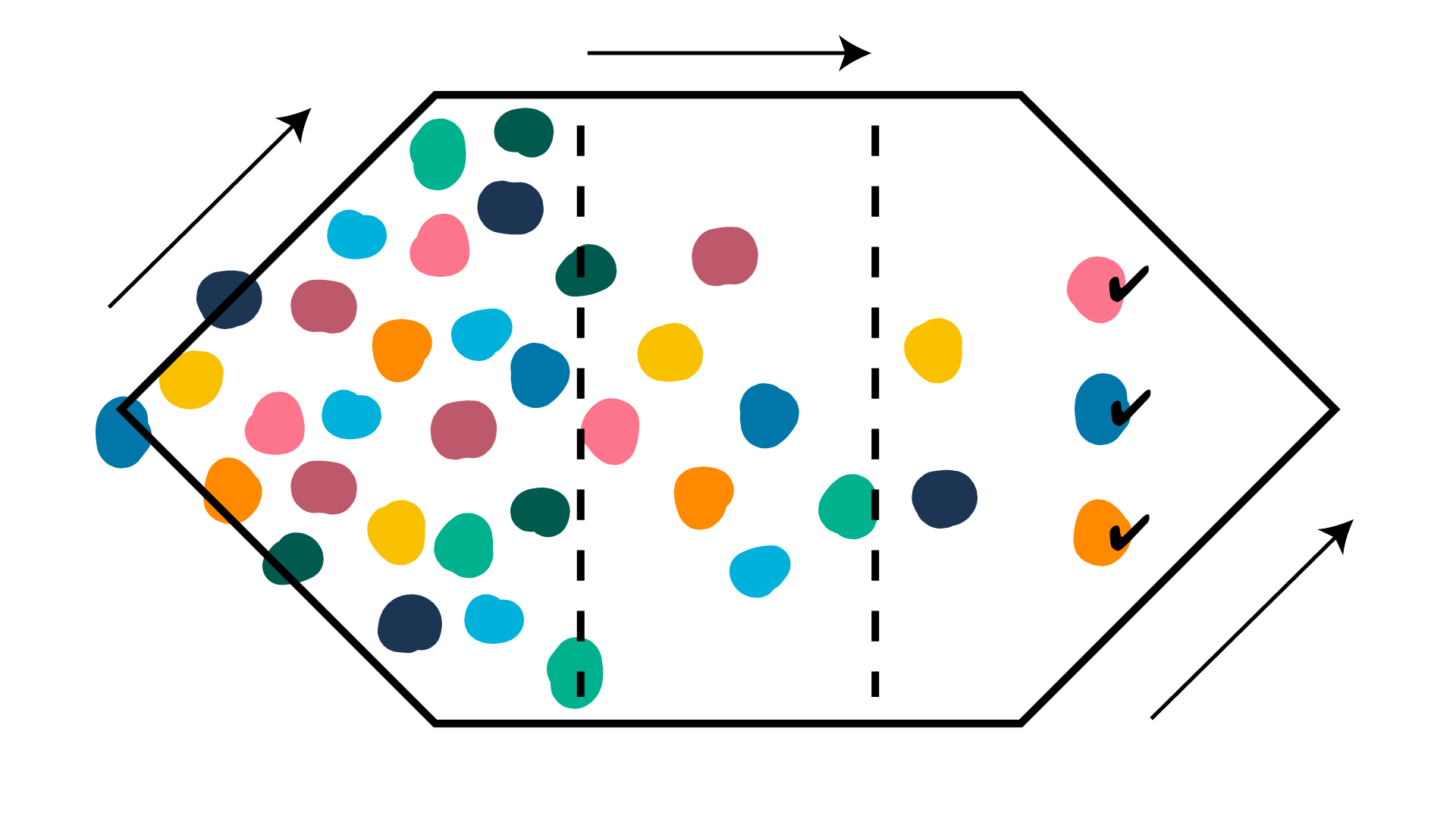
Pressure is persistent
Organisations operate under constant demand. Targets, deadlines, customer needs, financial pressures. All of these pull attention toward immediate delivery. Even when leaders value reflection, the gravitational force of urgency is strong. Without a deliberate container, sense-making is the first thing to disappear.
Good intent is not structure
Most leaders I work with care deeply about doing good work. They want thoughtful decisions. They want engaged teams. They want change to land well. But having good intentions does not create the conditions for collective thinking. A container does.
A container can be:
a dedicated sprint
a bounded session
a structured exploration
a time-limited experiment
In each and every case it is the purpose that leads and the form of the container that follows.
Prototyping as learning, not performance
One of the most misunderstood aspects of this work is prototyping. Prototypes are often assumed to be polished wireframes or technical pilots. The definition I stick to is that a prototype is one of three things: a sketch, a model or a role play. And it exists for two purposes: to share ideas and to learn. In the book “Creative Confidence” Tom and David Kelley advise, “never turn up to a meeting without a prototype”.
When teams prototype ideas early in lightweight, visible ways, they test assumptions before building organisational weight around them. They discover what the real problem is before scaling a partial solution.
This is particularly relevant in moments of technological excitement, where the temptation to build quickly can outpace understanding.
Safety and constraint
A container also creates psychological safety. When people know there is a defined space to explore, question, and test thinking, they are more willing to engage honestly. The art is in the creation, holding and navigation of the container. That is the role of openness, neutrality and invitation. The successful creation of a container is evident in its boundaries and it’s depth of outcome.
Making it sustainable
Sense-making is not a one-off and it doesn’t require constant slowing down. It is a practice. With the right containers in place, leaders can return to sense-making at key moments.
before major decisions
at points of drift
when energy drops
when complexity increases
It becomes a rhythm rather than a reaction. The pace of change is unlikely to slow. The pressure on leaders is unlikely to ease. What can change is how we respond to the pulls happening around us. Making sense together before moving forward may not be the loudest strategy available. It is often the most durable.
If any of this feels familiar, I’d be interested to hear how it’s showing up in your world.
You’re very welcome to get in touch, or book a time to talk.